The Greatest Measure of a Team

We’ve spoken often about teambuilding and culture — about Tuckman’s Forming, Storming, Norming, and Performing framework and how teams evolve over time. Those stages are not confined to a single season. They play out across years, even decades, when the culture is strong enough to endure.

For more than 40 years, I’ve been blessed with teammates who are still very much part of my life. These (near) lifelong friends and I have shared a wide range of pursuits — some individual, some collective — but always rooted in the same foundation: a shared understanding of our environment, a shared vision of the goal, shared values, and a shared belief that we will succeed together.

This February, several of my old high school teammates committed to completing 100 pushups per day. It’s simple. It’s measurable. It’s shared.

As an early riser, I usually send the first “100” text to the group. That message does more than report completion. It establishes momentum. It sets the tone for the day.

On mornings when my schedule disrupts that routine, someone else steps seamlessly into the leadership role. There’s no hesitation. No formal assignment. No discussion about who’s in charge. One man starts the fire; another quickly fans the flames. Before long, the behavior becomes contagious.

What began as a way to stay in shape and maintain communication has evolved into something more meaningful — a daily example of peer-driven accountability and distributed leadership.

It reinforces a truth we’ve discussed here before: leadership is situational, not positional. Anyone on the team can lead. What matters is not who starts — it’s that someone does.

In prior posts, I’ve written about the concept of the First Follower, a leadership idea popularized by Derek Sivers in his TED Talk, “How to Start a Movement.” His point is simple but powerful: a lone leader is simply an outlier until the first follower validates the behavior. The first follower transforms an individual act into a shared norm. Momentum is born in that moment of validation.

Over time, enduring teams develop two defining characteristics:

Distributed Leadership — initiative rotates naturally based on circumstance.
Immediate Followership — positive behavior is quickly reinforced and amplified.

The 100-pushup challenge is a small daily act, but it reflects those larger principles. We hold one another accountable in ways that inspire rather than punish. We expect the best from each other — and for each other. The standard is high because the respect is high.

More than four decades have passed since we wore the same uniform and played under the same lights. The jerseys came off long ago. The locker room speeches faded. But the culture we built together never disappeared.

And that may be the greatest measure of a team.

Coach Rich Alercio is available to discuss coaching philosophy, X’s & O’s, or teach his O-Line “techniques in the trenches.” Contact Coach at richalercio@gmail.com and share http://www.olineskills.com with your colleagues and friends. Thanks for supporting this blog and joining our conversations, and as always, thanks for your time! 
Coaching, Caring, & Sharing at the Big New England Football Clinic

The Big New England Football Clinic has long been one of the premier coaching events in the region. Over the course of two days, coaches gather to study the game in detail, challenge their thinking, and learn from one another. High school and collegiate coaches from across New England and the Northeast will present on topics ranging from technical fundamentals to broader program-building philosophies. Events like this serve as a reminder that coaching is a profession built on shared knowledge. No matter how long you have coached, there is always more to learn—and always something valuable to contribute.

I will be presenting two sessions during the clinic. On Friday, March 6, I will speak on “Adding Screen Pass Options (SPOs) to Your Offense.” The screen game can be a powerful tool when integrated thoughtfully into an offensive structure. Properly taught and timed, it gives the offense an efficient way to counter aggressive defensive fronts while reinforcing discipline, timing, and communication along the offensive line.

On Saturday, March 7, I will present on “Incorporating Quarterback Run Reads into Your Gap Schemes.” Gap schemes have long been a foundation of physical offensive football. By adding quarterback run reads, offenses can create additional stress on the defense while preserving the downhill physicality that gap schemes provide. These concepts allow offenses to remain aggressive while forcing defenders to hesitate, creating advantages that can be decisive over the course of a game.

It is a privilege to be included alongside so many outstanding coaches who are committed to teaching and growing the game. Clinics like this are more than opportunities to present—they are opportunities to listen, learn, and refine your own approach. Every conversation, every session, and every shared experience contributes to the continuous improvement that defines great coaching.

Coach Rich Alercio is available to discuss coaching philosophy, X’s & O’s, or teach his O-Line “techniques in the trenches.” Contact Coach at richalercio@gmail.com and share http://www.olineskills.com with your colleagues and friends. Thanks for supporting this blog and joining our conversations, and as always, thanks for your time! 
Living The Loop

Silly as it sounds, people across the United States looked to a groundhog this week (and every February 2nd) for a weather forecast. That tradition became the basis for the 1992 movie Groundhog Day, starring Bill Murray. Murray plays Phil Connors, a man trapped in a time loop, forced to relive the same day over and over again.

If any group truly understands what Phil Connors was going through, it’s football coaches.

Every week of the season — and every year of our careers — feels like a metaphysical time loop. And the funny thing is, we don’t just endure the loop. We live in it. We thrive in it. We grow because of it.

When one game ends, win or lose, preparation for the next one begins immediately. The calendar resets. Film breakdown. Staff meetings. Practice scripts. Injury treatments. Corrections. Adjustments. A win is a milestone, but never a finish line. A loss is a lesson, but never a stopping point. Either way, we are on to the next game.

Week after week, we relive the same structure. But like Phil Connors, we don’t simply repeat it — we improve within it. Experience accumulates. Details sharpen. Teaching points become clearer. Adjustments become more precise. We get better because we operate inside the loop.

The annual cycle may be expanded, but is no different.

When the season ends, the loop simply evolves to a longer circumference. Strength programs begin. Depth charts are evaluated. Schemes are studied. Clinics are attended. Other staffs are visited. Spring practices are installed. 7-on-7 tournaments are scheduled. OTAs, mini-camps, and training camp follow. And before we know it, we are standing on the field for Game 1, and the weekly loop begins again.

There is no true beginning. There is no true end.

In the 25 years I have hosted the Alercio OLine Clinics, coaches often tell me the clinic feels like the unofficial start of their football season. I appreciate the sentiment and am humbled by it. But I often find myself wondering: When did it ever end?

I prefer to think of the clinic not as a starting point, but as part of the loop — the continuous cycle of learning, refining, sharing, and improving that defines our profession.

Because coaching isn’t seasonal work. It is iterative work. And the coaches who improve the most are the ones who embrace the loop rather than resist it. They understand that repetition is not redundancy. It is refinement. They understand that living in the loop is what allows us to grow, year after year, season after season, rep after rep.

Just like Phil Connors, we don’t escape the loop. We get better because of it.

Coach Rich Alercio is available to discuss coaching philosophy, X’s & O’s, or teach his O-Line “techniques in the trenches.” Contact Coach at richalercio@gmail.com and share http://www.olineskills.com with your colleagues and friends. Thanks for supporting this blog and joining our conversations, and as always, thanks for your time! 
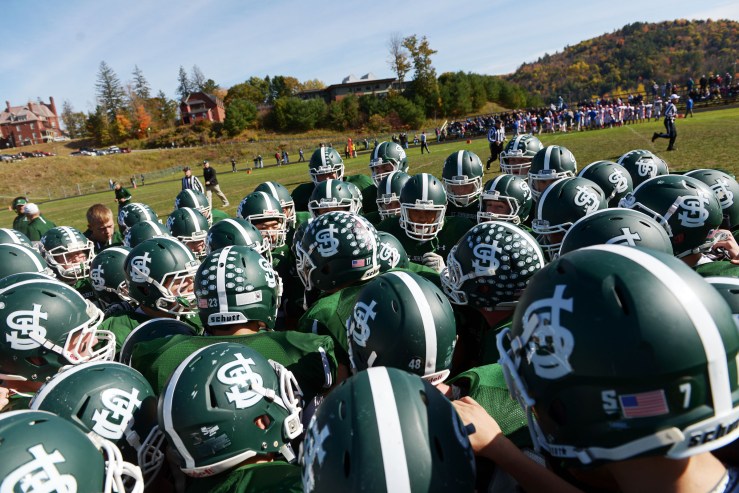
Setting the Example; Be A Lifelong Learner

The game of football never stands still. Schemes evolve, athletes change, technology advances, and expectations rise. When I started coaching in the 1980s, most teams lined up in the I-formation and we broke down games on 16mm film. Then came the shotgun and spread offenses, and film shifted to VHS. Next it was the Zone Read and compact discs. Today we’re coaching RPOs and studying practice and game film on cloud-based platforms. The tools and tactics may change, but one truth remains constant: the quality of the coach directly shapes the quality of the team. That is why professional development is not a luxury for football coaches—it is a necessity.

Coaching can be an isolating profession, especially at the high school level. Professional development creates opportunities to connect with other coaches, exchange ideas, and challenge each other’s thinking. It can take many forms: mentorship from experienced coaches, observing other programs in action, attending clinics and conferences, participating in webinars, and engaging in coaching communities both online and in person. No coach develops in isolation. Growth accelerates when knowledge is shared.

Players notice everything. When they see a coach who is staying current, open to learning, and committed to improving, it sends a powerful message. By investing in your own development, you show your players that growth is not a phase of life—it is a mindset. You reinforce that learning never stops, and that the same standards you expect from them apply to you as well.

A coach who is willing to learn, adapt, and improve creates players who are willing to learn, adapt, and improve. Lifelong learning is not just a professional responsibility; it is a leadership obligation.

Coach Rich Alercio is available to discuss coaching philosophy, X’s & O’s, or teach his O-Line “techniques in the trenches.” Contact Coach at richalercio@gmail.com and share http://www.olineskills.com with your colleagues and friends. Thanks for supporting this blog and joining our conversations, and as always, thanks for your time! 
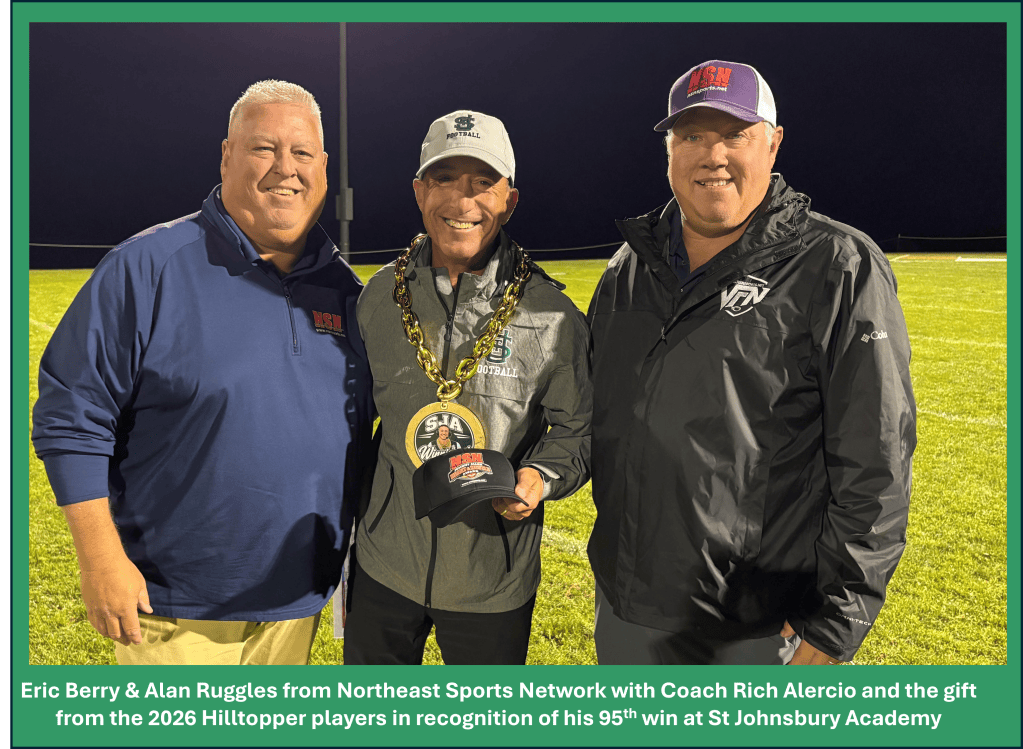
A Homecoming Built on Four Decades of Pass Protection

I’m honored to share that I’ve been invited to speak at the New Jersey Football Coaches Association Annual Clinic on Friday, February 6. Returning to my home state—where I played high school football and later coached at The College of New Jersey for 15 years—is both humbling and meaningful. Throughout my career, I’ve been blessed to be coached by, work alongside, and be mentored by outstanding coaches. This opportunity allows me to give back by sharing what I’ve learned with the next generation of teachers of the game.

My session will take a deep dive into the technical and tactical foundations of pass protection that have driven our success in the passing game at both the high school and college levels. Every successful passing play begins with protection, and every protection begins with the quarterback’s launch point. I’ll break down multiple pass protection schemes with an emphasis on moving the launch point so defenses can’t simply pin their ears back and attack a predictable spot. When we force defenses to defend space, angles, and timing, we gain the advantage.

I’ll also highlight the features and benefits of attending the New Jersey Alercio O-Line Clinics on April 12 and May 3, where coaches can bring their players to learn these techniques firsthand. There is no substitute for teaching fundamentals in person, on the field, with purpose and precision. For more information, click on the brochure image here.

Football has given me far more than I could ever repay. This clinic is one small way I can give back to the game and to the state that helped shape who I am as a coach and as a man. I’m looking forward not only to sharing ideas but to learning from an impressive group of high school and college speakers, reconnecting with old friends, and building new relationships along the way.

To register for the NJFCA Clinic, visit:
https://njfca.org/coaches-clinic/

Coach Rich Alercio is available to discuss coaching philosophy, X’s & O’s, or teach his O-Line “techniques in the trenches.” Contact Coach at richalercio@gmail.com and share http://www.olineskills.com with your colleagues and friends. Thanks for supporting this blog and joining our conversations, and as always, thanks for your time!  
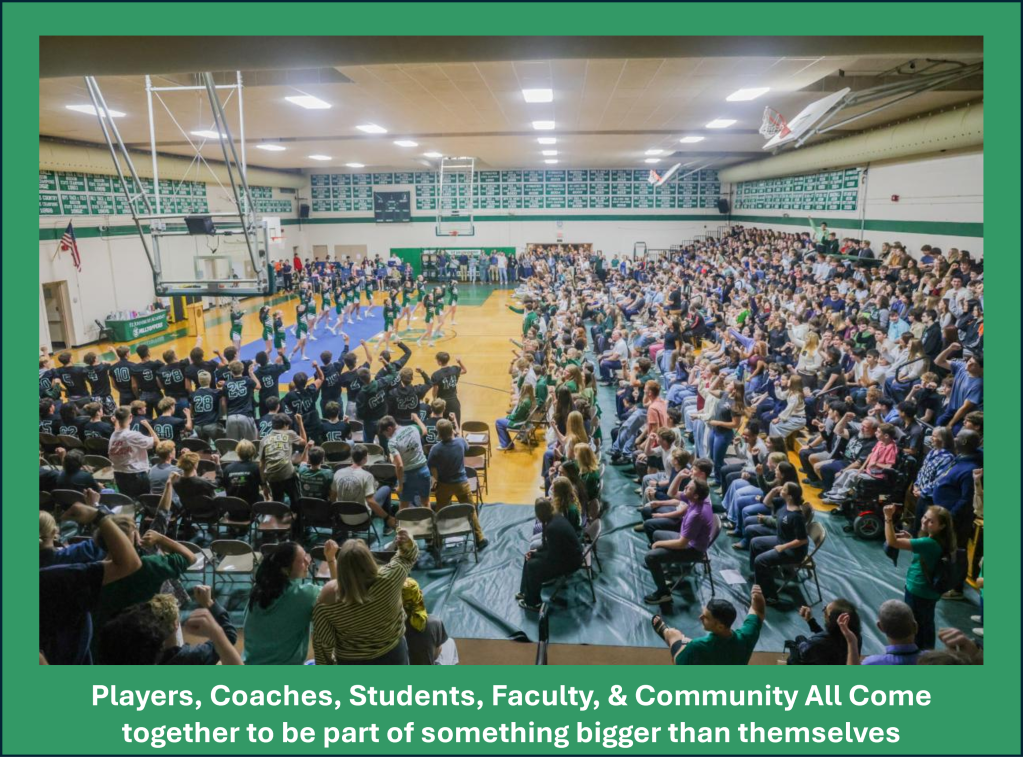
2026 Alercio OLine Clinics

Mark your calendars for the 2026 Alercio OLine Clinics dates and locations.  Our first clinic is Sunday April 12 at a new location in South Jersey, the Wildcat Sports Complex in Egg Harbor City.  We will return to West Orange High School on Sunday, May 3, for our North Jersey Clinic, and St. Johnsbury Academy will host our Vermont Clinic on Sunday, June 7.

There is a saying in football that games are won in the trenches.  For 25 years, Alercio OLine Clinics have specialized in teaching the technical and tactical skills of the trenches.  We believe that the true “Skill Players” in football are the offensive linemen.  Throwing, catching, running, and tackling are critical to the success of a football team, but they are innate abilities.  A skill is a learned ability to perform a task well, developed repetitively through practice and experience.  We teach the coordination and execution of learned physical tasks that allow linemen of any size to achieve both individual and team success.    

Players can register by completing the Registration form on our brochure or by scanning the QR Code.  Bring your entire offensive line to take advantage of our OLine Discount.  As always, all coaches attend at no cost.

Coach Rich Alercio is available to discuss coaching philosophy, X’s & O’s, or teach his O-Line “techniques in the trenches.” Contact Coach at richalercio@gmail.com and share http://www.olineskills.com with your colleagues and friends. Thanks for supporting this blog and joining our conversations, and as always, thanks for your time!  

Building Lasting Habits

Every January, as the director of a fitness center, I watch a familiar pattern unfold. New members pour through the doors, energized by New Year’s resolutions and good intentions. By February, many of those faces have disappeared. The problem is not motivation; it is expectation. New Year’s resolutions should not expire after a few weeks. Real change does not come from one oversized, unrealistic goal. It comes from building habits—small, repeatable actions that compound month after month.

James Clear captures this idea well in Atomic Habits: you should be far more concerned with your trajectory than your current results. Progress matters. Consistent actions sustained over twelve months create real, lasting change.

As a football coach, this is exactly how we prepare our players—not just for game day, but for life. We emphasize habits: how you train, how you recover, how you treat your teammates, and how you show up every day when no one is watching. Those behaviors define outcomes far more than a single workout, practice, or season ever could.

I turn 61 today, and I feel better now than I did half my life ago. That did not happen by accident. It happened by committing to the fundamentals and repeating them consistently over time.

Exercise is often called the “magic pill,” and for good reason. It strengthens the heart, muscles, and bones, improves circulation, and helps regulate blood sugar. It also plays a powerful role in mental health—reducing stress, improving mood, and increasing energy and focus. Unlike most medications, exercise has very few negative side effects when done safely and consistently. That said, exercise alone is not enough. Proper nutrition, adequate sleep, and hydration are equally essential parts of the equation.

As you look ahead to 2026, commit to a healthier lifestyle rooted in habits you can sustain. Focus on consistency over intensity. Build routines you can repeat. And when you find something that works, lead by example—bring others along with you. That is how real progress is made, on the field and in life.

Coach Rich Alercio is available to discuss coaching philosophy, X’s & O’s, or teach his O-Line “techniques in the trenches.” Contact Coach at richalercio@gmail.com and share http://www.olineskills.com with your colleagues and friends. Thanks for supporting this blog and joining our conversations, and as always, thanks for your time!  

Strengthening the Brotherhood: Honoring the Team Behind the Team

After all the varsity letters and pins had been distributed, after the post-season awards were announced, and after our seniors were recognized for their contributions, we closed our annual football banquet with a moment of gratitude. Our captains offered thanks to the heads of our Friends of Football Booster Club—Bea and Len Harden—whose quiet, consistent service strengthens the fabric of our program.

Bea and Len open their home to our players for pre-game meals, creating a positive and welcoming environment where student-athletes can gather, share time together, and celebrate their brotherhood. They organize fundraisers, steward our resources with care, and keep the lines of communication open with every family in our program. Their efforts ensure that parents feel informed, involved, and invited into the shared work of supporting the team. Just as importantly, they have helped build a system that can be handed down year after year, allowing the organization to thrive even as players graduate and families move on.

Their tireless work lifts a tremendous burden from my shoulders as head coach and gives me more time to focus on preparing our players—not just for Friday nights, but for the challenges that await them beyond the field. Our coaching staff helps turn a group of individuals into a team. Our parents’ group helps turn that team into a family.

Coach Rich Alercio is available to discuss coaching philosophy, X’s & O’s, or teach his O-Line “techniques in the trenches.” Contact Coach at richalercio@gmail.com and share http://www.olineskills.com with your colleagues and friends. Thanks for supporting this blog and joining our conversations, and as always, thanks for your time!  

Please enjoy some additional photos of the 2025 Hilltoppers, a group of exceptional teammates!

Celebrating the Season: Showcasing Achievement and the Behaviors That Build Champions

This weekend, we will gather the 2025 Hilltopper Football Team one final time for our annual banquet—a moment to reflect, to honor, and to celebrate the season we built together. After watching our highlight video, sharing a meal, awarding varsity letters, acknowledging post-season honors, and recognizing the contributions of our seniors, we conclude the evening with our Superlative Awards.

These awards matter for reasons that go far beyond individual achievement. Each one reinforces a standard of behavior we want carried forward. They illuminate the habits, mindsets, and daily choices that shape a championship culture, offering returning players a clear path to follow.

Our Most Improved Player embodies our belief that games are not won on weekends in the fall. His relentless commitment to self-improvement—through the off-season and in every practice—was matched by his energy, effort, and enthusiasm. His growth elevated both himself and the team.

The Scout Team Player of the Year represents the purest form of selflessness. Operating in near anonymity, he approaches each day with a singular mission: to push his teammates to be better prepared for game day. His contribution is measured not in headlines, but in the competitive edge he gives everyone around him.

In a program full of heroes—where many players earn media attention and postseason accolades—the Unsung Hero stands apart. He does everything asked of him, without expectation of praise, and in doing so becomes indispensable to the team’s success.

Our Most Valuable Player is not simply the one who scores the most points or fills the stat sheet. He is the player whose presence most profoundly shaped our season—as a performer, as a leader, and as a standard-bearer for what it means to be a Hilltopper.

These awards remind us that success is built on behaviors worth repeating. By elevating those examples, we offer every returning player a roadmap for what comes next.

Time Well Spent

It takes a lot of hours over multiple days to meet 1-on-1 with every player on a 50-man roster, but it is time well spent and an exercise I enjoy every year.  

This year’s meetings were held in our newly designed athletics conference room.  I sat in one of four chairs surrounding a 4-foot round table.  Interestingly, after several meetings, I noticed that more veteran players sat in a chair closest to me while younger players sat across the table in the chair furthest from me.  It was a stark reminder of how uncomfortable a teenager can be in that type of setting with an adult.  

Before the meetings, I messaged all players to be prepared to discuss their reflections on the season, their role on the team, how they were treated on the team by teammates and coaches, their plans for the off-season, their plans for next year, and finally, I asked them to be prepared for what I might say about them.  

Providing them with an outline of how the meeting would go, I hope to better prepare them as well as allow us to be efficient with our time.  Regardless of what was said during the meeting, the goal is to end every meeting on a positive and motivating note, reinforcing my belief in their potential so that they feel encouraged to work hard in the offseason and look forward to returning to the team for Spring Ball.

Coach Rich Alercio is available to discuss coaching philosophy, X’s & O’s, or teach his O-Line “techniques in the trenches.” Contact Coach at richalercio@gmail.com and share http://www.olineskills.com with your colleagues and friends. Thanks for supporting this blog and joining our conversations, and as always, thanks for your time!