We’ve spoken often about teambuilding and culture — about Tuckman’s Forming, Storming, Norming, and Performing framework and how teams evolve over time. Those stages are not confined to a single season. They play out across years, even decades, when the culture is strong enough to endure.
For more than 40 years, I’ve been blessed with teammates who are still very much part of my life. These (near) lifelong friends and I have shared a wide range of pursuits — some individual, some collective — but always rooted in the same foundation: a shared understanding of our environment, a shared vision of the goal, shared values, and a shared belief that we will succeed together.
This February, several of my old high school teammates committed to completing 100 pushups per day. It’s simple. It’s measurable. It’s shared.
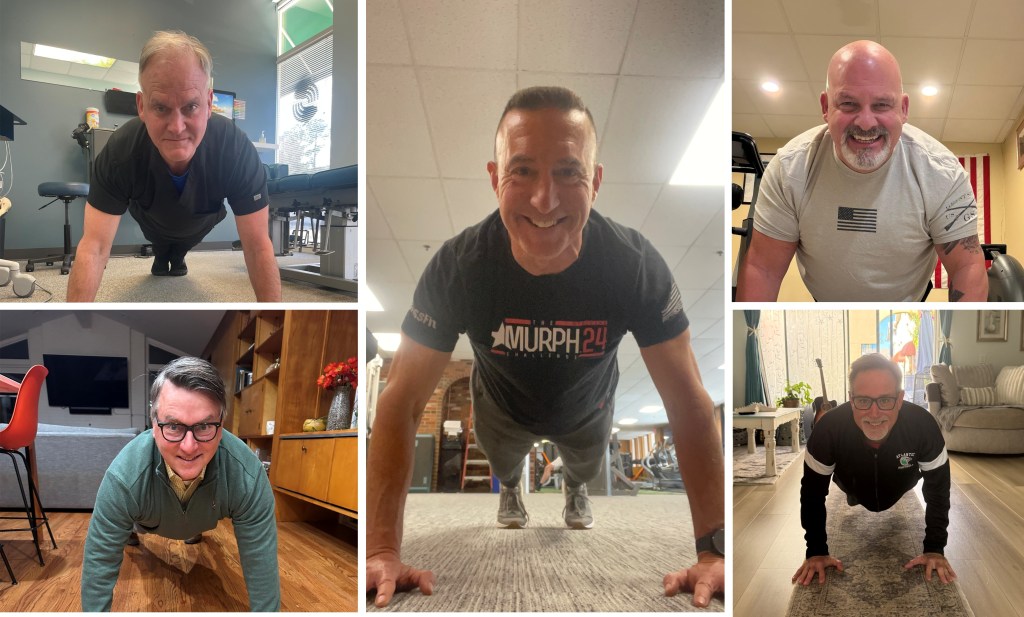
As an early riser, I usually send the first “100” text to the group. That message does more than report completion. It establishes momentum. It sets the tone for the day.
On mornings when my schedule disrupts that routine, someone else steps seamlessly into the leadership role. There’s no hesitation. No formal assignment. No discussion about who’s in charge. One man starts the fire; another quickly fans the flames. Before long, the behavior becomes contagious.
What began as a way to stay in shape and maintain communication has evolved into something more meaningful — a daily example of peer-driven accountability and distributed leadership.
It reinforces a truth we’ve discussed here before: leadership is situational, not positional. Anyone on the team can lead. What matters is not who starts — it’s that someone does.
In prior posts, I’ve written about the concept of the First Follower, a leadership idea popularized by Derek Sivers in his TED Talk, “How to Start a Movement.” His point is simple but powerful: a lone leader is simply an outlier until the first follower validates the behavior. The first follower transforms an individual act into a shared norm. Momentum is born in that moment of validation.
Over time, enduring teams develop two defining characteristics:
Distributed Leadership — initiative rotates naturally based on circumstance.
Immediate Followership — positive behavior is quickly reinforced and amplified.
The 100-pushup challenge is a small daily act, but it reflects those larger principles. We hold one another accountable in ways that inspire rather than punish. We expect the best from each other — and for each other. The standard is high because the respect is high.
More than four decades have passed since we wore the same uniform and played under the same lights. The jerseys came off long ago. The locker room speeches faded. But the culture we built together never disappeared.
And that may be the greatest measure of a team.
Coach Rich Alercio is available to discuss coaching philosophy, X’s & O’s, or teach his O-Line “techniques in the trenches.” Contact Coach at richalercio@gmail.com and share http://www.olineskills.com with your colleagues and friends. Thanks for supporting this blog and joining our conversations, and as always, thanks for your time!
 O Line Skills