Most couples have a good relationship during their courtship, wedding, and honeymoon (the Forming Stage), but there is a reason for the expression, “The honeymoon is over”. The same applies to teams.
In week #2 of our OTAs, we see differences arise over roles on the team. As we prepare for our first 7v7 at UMass on Friday, we have multiple players competing at almost every position. We are also asking players to learn 2 positions. This competition naturally causes some animosity among players and at times negatively impacts communications. We are also seeing some seniors attempting to step up as leaders but others not yet being willing to follow.
Our returning starters, returning seniors, returning underclassmen and rookies are all asking themselves the same question, “What is my role on this team?” The UMass 7v7 will provide the first opportunity for players to define their role in leadership as well as on the depth chart.
Last week we talked about “Forming” the first stage of Teambuilding (using Tuckman’s model), and this week we discuss “Storming.” It’s important to note that while all teams go through these stages, the stages occur at varying paces and group dynamics evolve based on multiple variables.  While I may be discussing these stages in weekly posts, I don’t mean to suggest I think our team (or many others) moves from stage to stage in one-week intervals. The goal is to work through Forming, Storming, and Norming (essentially assembling the pieces of the puzzle) before the real season kicks off. “If” we time it right (always an “if” given the variables we juggle), we’ll hit the “Performing” stage about a week before our season opener and move through the season refining our performance.
Last week in the “Forming” Stage, we talked about reliance on routine and discipline. Coaches are very prescriptive and establish baseline expectations for performance, commitment, and in my mind most importantly our culture.
When we discuss the “Storming” Stage, our coaches focus on
- Reinforcing process, structure & discipline
- Developing fundamental skills
- Cultivating a shared awareness of purpose, values & circumstance
- Fostering Interdependence
It’s important to note that while we discuss these stages as sequential elements, there are occasions where individual, small unit, or the entire team’s performance may warrant revisiting the direction and discipline of the “Forming” stage or the elements highlighted above as “Storming.”
Through all the stages of teambuilding, it is essential to emphasize the importance of treating players, teammates, and members of our staff with dignity and respect. Anyone who has played or coached with, or for me can attest the passion I try to convey in my approach to the game. However, Coaches, players, parents, and faculty should remember any constructive criticism offered on or off the field is directed at a player’s performance, execution, or decision making, never at a person or group of people.
If we are to be collectively successful at this game, and (more importantly) in life, we have to understand the importance of our interdependence and the value of mutual respect. Only then can we develop and reinforce concepts like shared values, purpose, and situational awareness.
Coach Rich Alercio is available to discuss coaching philosophy, X’s & O’s, or teach his O-Line “techniques in the trenches.” Contact Coach at richalercio@gmail.com and share http://www.olineskills.com with your colleagues and friends. Thanks for supporting this blog and joining our conversations, and as always, thanks for your time!
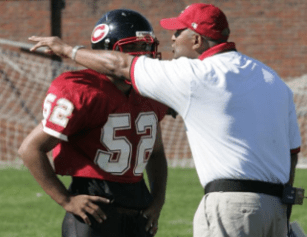 Even returning veterans of the program benefit from the mental adjustments catalyzed by sharp, pointed direction, and the shrill of a coach’s whistle. Life is no longer “normal.” Players are reminded “games are not won on Fridays and Saturdays in the Fall…” Players new and old are candidly reminded of their responsibilities and commitments to teammate and team. Coaches relay the importance of setting a personal example… an example of what it means to be a Hilltopper on and off the field, as well as in the community.
 our team who have what it takes and identify those who can be inspired to have what it takes. Our job as coaches is to help those who have it to reinforce it, and those who don’t yet know, to find it, and to recognize both that they “have what it takes…” and that it must be both cultivated and for all to know it must be protected.
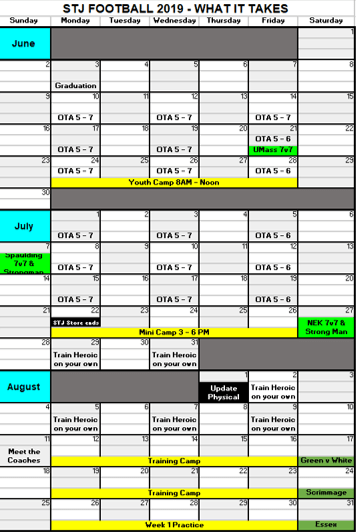 If you want better participation numbers for your summer organized team activities (OTAs), be sure to create a calendar and get it into the hands of your players and their parents as soon as possible. We distributed ours on Friday of last week. With family vacations, other sports travel teams and everything else kids can do these days, we need them to know in advance when and where they need to be.
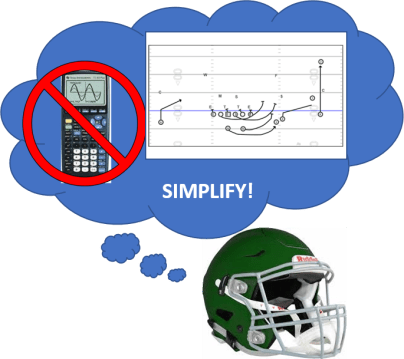 Even more problematic, we coaches have a funny way of making things more difficult than necessary…
 The Giants clearly prioritized culture over talent when they traded away one of the most talented players in the league earlier this year. They also went with culture with their #6 pick in the draft. Not to say that Daniel Jones is not talented, but he is most definitely the best cultural fit of this year’s QB choices due to his relationship with the Mannings.