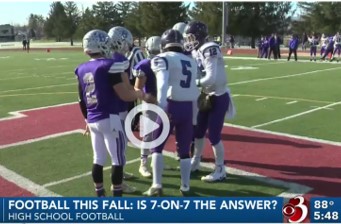

Not long after it was announced that Vermont high schools would be playing 7v7 football in place of traditional tackle football, I was invited to do a radio interview with Sports Saturday hosted by Jeff Paul, on 101.3 THE GAME in Burlington.
One of the topics of conversation centered around the positives of this temporary change. One of those positives for many teams may be a negative for us, since we already pass the ball. Vermont is a run oriented state. Teams in the Green Mountain State run the ball and defend the run very well. 7v7 affords those teams an opportunity to work on their passing game as well as their coverages to defend the pass. Without the physical mismatches of traditional football, it also allows big schools and small schools to play against each other allowing for teams who would never normally play each other to get together and compete. Only one team on our 7v7 schedule was on our original schedule. I look forward to playing those other teams.
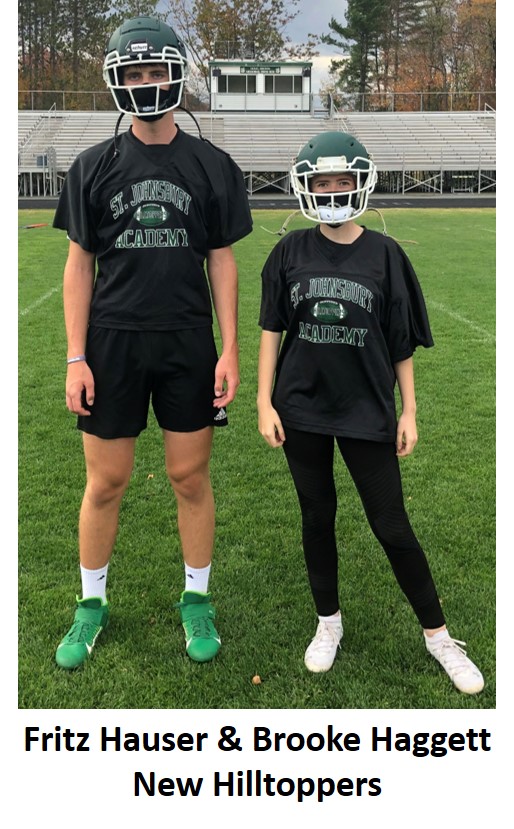
The last, and most important, benefit is that 7v7 allows an entry point to football for those who may have never played tackle. At St Johnsbury Academy, we were fortunate to acquire two additions to our team that we would not have had without 7v7. During the summer prior to the decision to go 7v7, I was contacted by Fritz Hauser who was transferring to the Academy as a junior and entering our boarding program. He is a basketball player who always wanted to play football. A week later, he informed me that he would not play. His parents did not want him to risk injury before basketball season. While that is an understandable concern, I am happy to say that we have never had an athlete miss their winter sport due to a football injury. Soon after the announcement we would play 7v7, Fritz reached back out to say he was going to join us. He has proven to be a quick study, a hard worker, and a great teammate.
After the first week of the season, I received an email from a mother indicating her child, Brooke, was interested in joining the team but had never played football. I invited her to have Brooke join us the next day to observe practice. After watching us that day, Brooke decided to join us. The next day Brooke put on a football helmet and jersey for the first time and took the field, (although admittedly a little nervous and apprehensive). Our players quickly brought Brooke up to speed on drills and techniques. Brooke has worked as hard as any player on the field and harder than most in her video and playbook study while catching up and learning a new sport.
As we referenced in last week’s blog, personal differences do not matter. In the huddle, we are all Hilltoppers. Brooke and Fritz make us a better and stronger team. I am hopeful that both of them decide to stay with us when we transition back to tackle football. For now, I am just happy to have the opportunity to coach them.
You can hear my entire interview with Jeff Paul from 101.3 The Game here:
Coach Rich Alercio is available to discuss coaching philosophy, X’s & O’s, or teach his O-Line “techniques in the trenches.” Contact Coach at richalercio@gmail.com and share http://www.olineskills.com with your colleagues and friends. Thanks for supporting this blog and joining our conversations, and as always, thanks for your time!
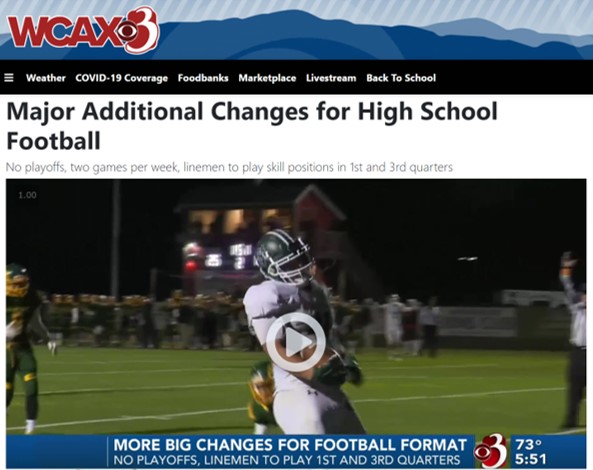
 Fall sports, work with our athletes, and to motivate them to be the very best version of themselves on and off the playing fields. This year, that will include managing distractions like COVID safeguards, playing 7v7 football, wearing a mask during practices and games, and tuning out the naysayers.
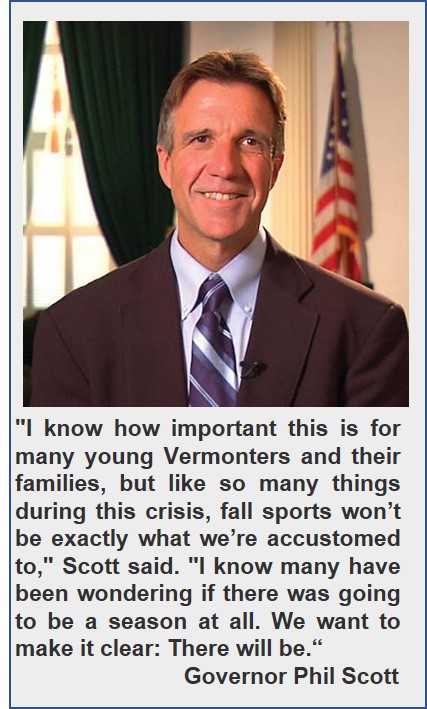 Fall sports, I was both thrilled and relieved to hear Vermont Governor Phil Scott announce “We want to make it clear, there will be Fall sports.” It is evident the Governor, the Agency of Education, and the Vermont Principals Association understand how vital extracurricular activities are in the lives of so many students and families. It is critical to their physical and mental health. Cancelling cannot be an option.