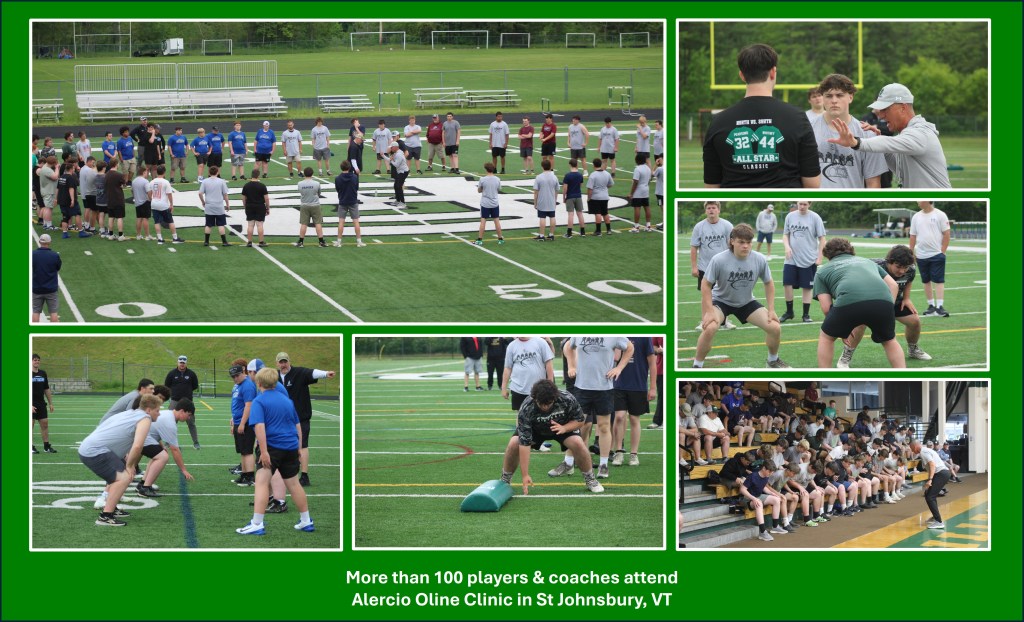
We had more than 100 people on the turf at St. Johnsbury Academy this past Sunday for the Vermont Alercio O-Line Clinic. Throughout the morning, we had a lively combination of players participating and high school and college coaches observing.
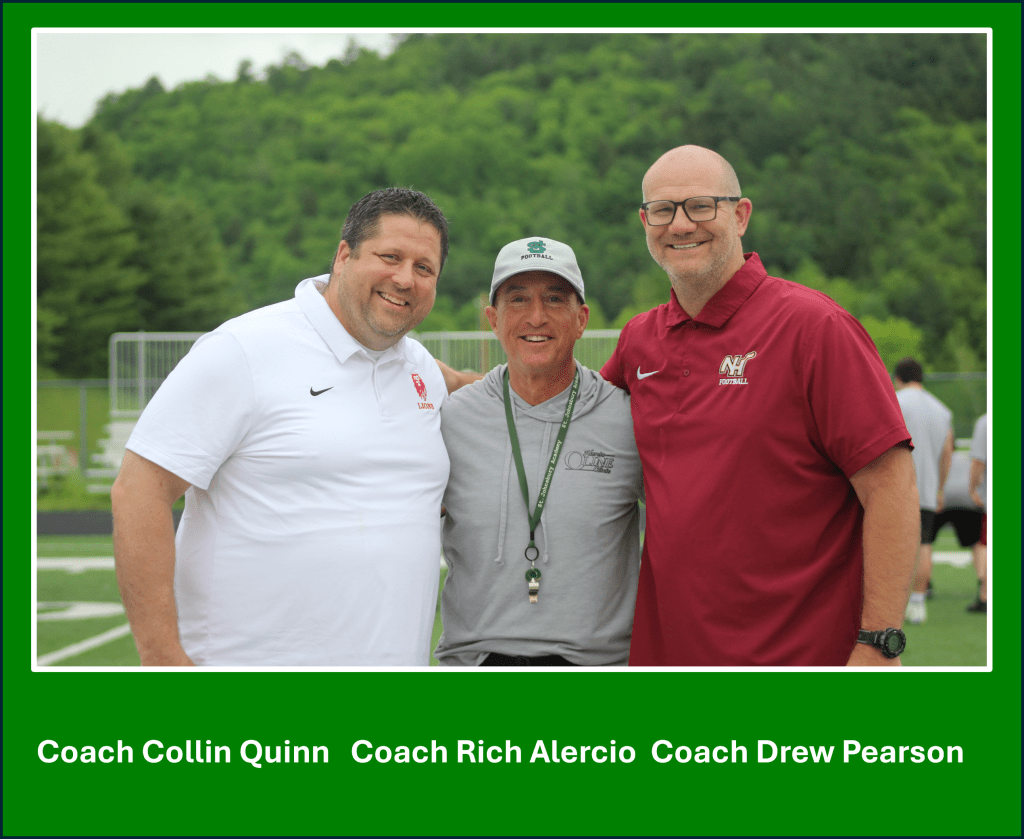
Two of those coaches, Collin Quinn from Minnesota and Drew Pearson from Arizona, contacted me earlier in the week to ask if they could fly in and observe the clinic. I am very glad they did.
After the four-hour clinic concluded, we made plans to meet later that day in my office. During our 2½-hour conversation, Collin mentioned how impressed he was with the communication displayed by our St. Johnsbury Academy offensive line before the snap. Specifically, he noted the way our players consistently communicate protections, fronts, and assignments at the line of scrimmage.
Collin compared what he observed to a concept James Clear discusses in his book Atomic Habits. In Chapter 4, Clear references the Japanese railway system’s “Pointing-and-Calling” safety technique to illustrate the power of making unconscious habits conscious.
Train operators and platform staff perform a deliberate routine in which they physically point to important objects and verbally state their observations aloud.
Approaching a signal: The operator points at it and says, “Signal is green.”
Pulling into a station: The operator points at the speedometer and calls out the exact speed.
Departure: The operator points at the timetable and calls out the time.
On the platform: Staff point along the edge of the platform and declare, “All clear!”
According to Clear, this simple ritual is remarkably effective for three reasons:
Conscious Awareness: It elevates routine actions from an automatic habit to a conscious decision.
Brain Engagement: It forces the brain to process information more deeply by engaging multiple senses simultaneously—vision, hearing, speech, and physical movement.
Fewer Mistakes: By anchoring behavior to a vocal cue, the railway system reduced operator errors by 85 percent and train mishaps by 30 percent.
Collin’s observation was that our offensive line operates in a very similar manner. By constantly identifying fronts, declaring calls, confirming assignments, and communicating adjustments before the snap, our players are doing more than simply talking. They are actively processing information, creating accountability, and ensuring that all five players see the same picture. In many ways, they are using football’s version of Pointing-and-Calling.
As coaches, we often focus on physical technique, but Sunday’s conversation was a reminder that elite execution begins with communication. The more our players verbalize what they see and what they are responsible for, the more likely they are to play fast, play confidently, and avoid costly mistakes.
What struck me most was that this observation came from coaches who had just spent four hours watching our players work. Of all the techniques, drills, and schemes they could have discussed, they kept coming back to communication. That speaks volumes about the growth, maturity, and attention to detail demonstrated by our offensive line.
As we wrapped up our time together, Collin and Drew had one final question:
“Can we pray for you and your family?”
We concluded our session in prayer. It was a fitting end to a day that had begun with football and coaching but evolved into something much more meaningful.
While I appreciated their observations about offensive line play and communication, I was even more grateful for the opportunity to spend time with two men who share a commitment to developing young people, building relationships, and living out their faith.
Sunday’s clinic reinforced a lesson that extends far beyond football. When people come together with a shared purpose, meaningful conversations often follow. And sometimes, those conversations become lasting friendships.
Coach Rich Alercio is available to discuss coaching philosophy, X’s & O’s, or teach his O-Line “techniques in the trenches.” Contact Coach at richalercio@gmail.com and share http://www.olineskills.com with your colleagues and friends. Thanks for supporting this blog and joining our conversations, and as always, thanks for your time!

