
“If it’s important to them, it needs to be important to you.”
I’ve tried to live by that philosophy with my family and with my employer. This weekend, I was reminded that it applies to my team as well.
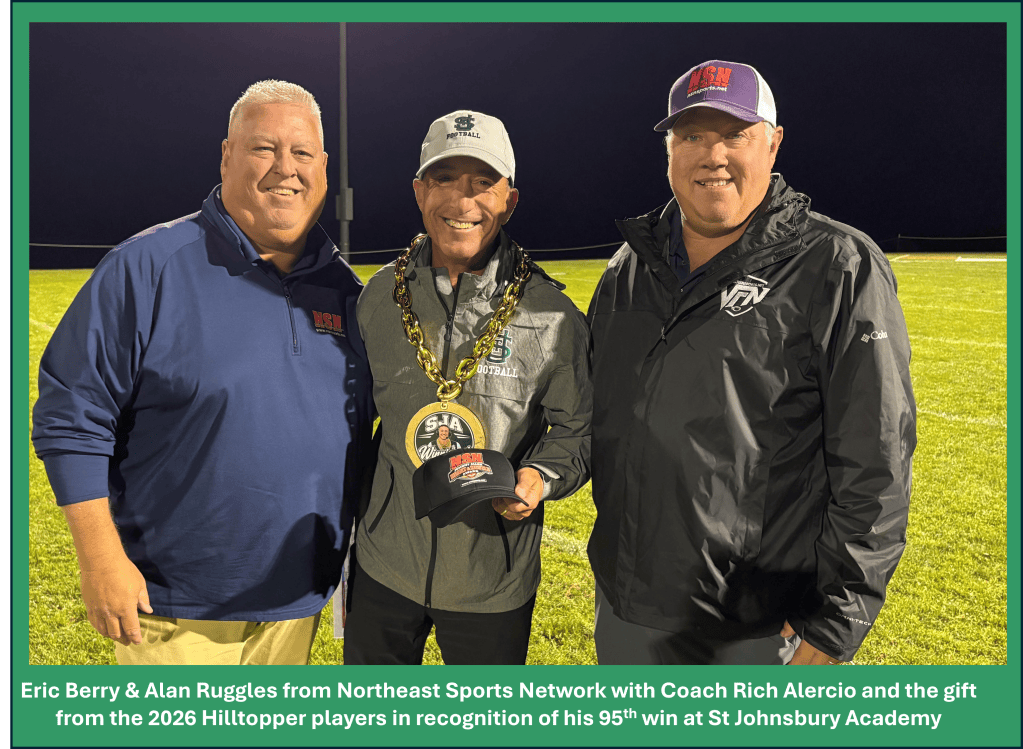
Friday night’s win turned out to be a milestone victory for me—my 95th win as head coach at St. Johnsbury Academy, making me the winningest football coach in school history.
It wasn’t a milestone I had been keeping track of.
Our players had.
As we broke the post-game huddle, one of our captains began to turn the focus toward the milestone. Recognizing where he was going, I tried to put a quick end to it.
I told them to keep the focus where it belonged: on what they had just accomplished.
We had gone on the road and beaten a tough, well-coached team that had beaten us a year earlier in the state championship game. That was the accomplishment I wanted them to celebrate.
Then I looked at their faces.
They were disappointed.
Our captain looked at me and said, “But Coach, we got you a present.”
In that moment, I realized something.
I had decided what should be important. They were trying to tell me what was important to them.
So, I made it important to me.
I conceded to their request, and they presented me with their gift—a big, cold chain with a medal and a photo of me on it.
We celebrated together, then boarded the bus for the long ride home.
The gift itself will always mean something to me. But what means even more is why they gave it to me.
They were proud of what they had accomplished, but they also wanted to recognize someone they felt had been part of their journey. They wanted to celebrate something that mattered to them.
As coaches, we spend a lot of time teaching our players what we think is important. We establish standards. We teach discipline, toughness, accountability, teamwork, and the countless details required to play the game the right way.
But coaching is also about understanding your players.
Sometimes, they remind us that the things we think are important aren’t always the things they think are important. And sometimes, the best thing a coach can do is stop, listen, and let the players have their moment.
That cold chain and medal will eventually find their way into a box somewhere with other keepsakes from a long career. But the memory of those players standing there saying, “But Coach, we got you a present,” will stay with me forever.
If it’s important to them, it needs to be important to you.
Sometimes, our players teach us as much as we teach them.
Coach Rich Alercio is available to discuss coaching philosophy, X’s & O’s, or teach his O-Line “techniques in the trenches.” Contact Coach at richalercio@gmail.com and share http://www.olineskills.com with your colleagues and friends. Thanks for supporting this blog and joining our conversations, and as always, thanks for your time!

