The annual NFL draft offers teams an opportunity  to pick players they feel best fit their team. But what are their criteria? Do they take the best player available? Do they fill a positional need? Do they allow character flaws to impact their decisions? How would you choose your team?
Over the past two years, I shared blogs detailing a practice we do at St Johnsbury Academy. We draft our own team. I share a list of all of our returning players with our assistant coaches and ask them to provide a draft order. I do not provide criteria. Their draft order indicates a great deal about their perspective and what is important to them as coaches. Then I compare theirs to mine to see if the characteristics and traits I have set for our program are mirrored by our coaches. Once completed, it provides an opportunity to discuss values, attributes, and culture.
Internally, this exercise helps me assess the effectiveness of my communication as a head coach, as well as affording me the opportunity to assess my staff’s willingness to think independently and express well-thought opinions. More directly in relation to the actual depth chart of returning veterans, this annual exercise also identifies any positional changes we may need to make in the off-season to ensure we field the best 11 on game day.
This weekend, I took a list of all of the players who have played for us at the Academy since we put our staff together in 2013 and drafted an “All 20-Teens Team” (2013-2019). I listed only one name per position and included utility players for Offense, Defense, and Special Teams. As I looked back on the list of 25 players, I realized how blessed we have been with the talent we have had over the past 7 years. But, more importantly, all the names on the list embodied the values and culture we have worked so hard to instill. They were not only the most talented; they were the most selfless, the hardest working, and the best leaders. They embraced the camaraderie in the locker room, brotherhood on the field, and accepted the responsibility of representing our team in the school and community. They welcomed younger players into our program and shared our culture and values. I was also reminded how time flies, and in the fleeting moments we as coaches have to impact the lives of our student-athletes, our real pride shines through witnessing the men we give back to the community: who they become and all they accomplish after the last whistle blows.
Coach Rich Alercio is available to discuss coaching philosophy, X’s & O’s, or teach his O-Line “techniques in the trenches.” Contact Coach at richalercio@gmail.com and share http://www.olineskills.com with your colleagues and friends. Thanks for supporting this blog and joining our conversations, and as always, thanks for your time!
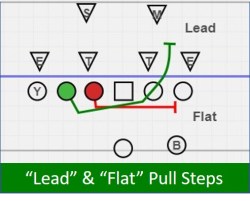 and turn our body 90 degrees so that we can run Flat down the line of scrimmage or parallel to the line of scrimmage to Kick out a first level defender (Defensive Lineman) on the other side of the Center.
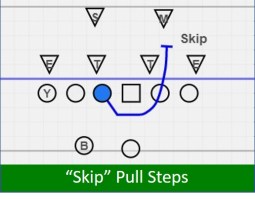 a crossover drop step with your backside foot going behind your play-side foot then follow with the play-side foot to keep your hips and shoulders parallel to the line of scrimmage.
 This week, we will focus on Pass blocking and you will need a broom handle and the video camera in your phone.
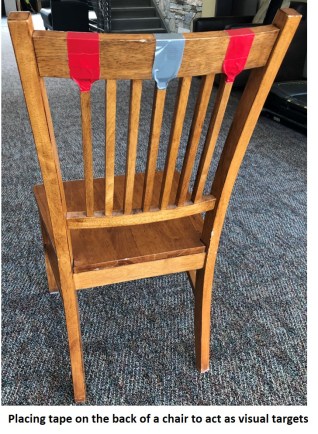 sternum as well as right third and left third representing defender’s numbers. Place tape on the top back of the chair as it is in the photo. The chair posts represent the defender’s shoulders.
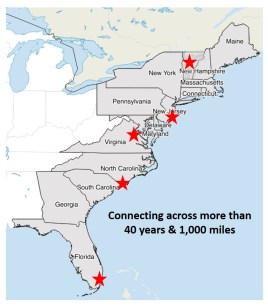 North Carolina, and Florida disappeared and it was if they were sitting with me in my kitchen. After 90 minutes of catching up on everything from our children’s accomplishments to our home projects, we ended the call grateful for our friendships, time together, and with plans to schedule the next one.
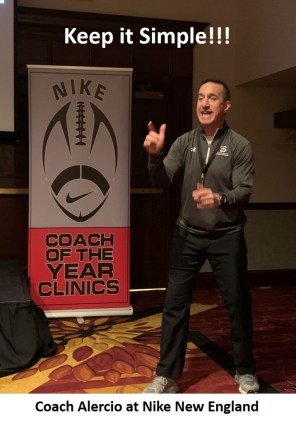 complicated by coaches trying to prove how brilliant they are. But the key to prolonged success in football is keeping it simple so the players know it almost as well as the coaches. One of the greatest compliments I received was from Mike Kuchar, Co-founder and Senior Editor of XandOlabs.com, when he said, “the clarity of your teaching simplifies the game tremendously.”
 There was a tiger paw everywhere you looked on campus and in town and everyone wore Clemson Tiger apparel. The football stadium and facility were a highlight. Championship rings and trophy displays were amazing. I was struck by scope, scale, and complexity of the football operations and culture, but then realized the same teambuilding process we employ in northern Vermont (albeit at a much smaller scale) happens there in Clemson, South Carolina.
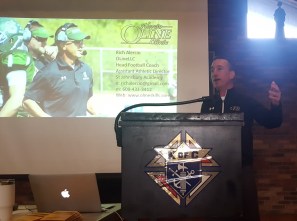 Atlantic City, NJ to attend the
