
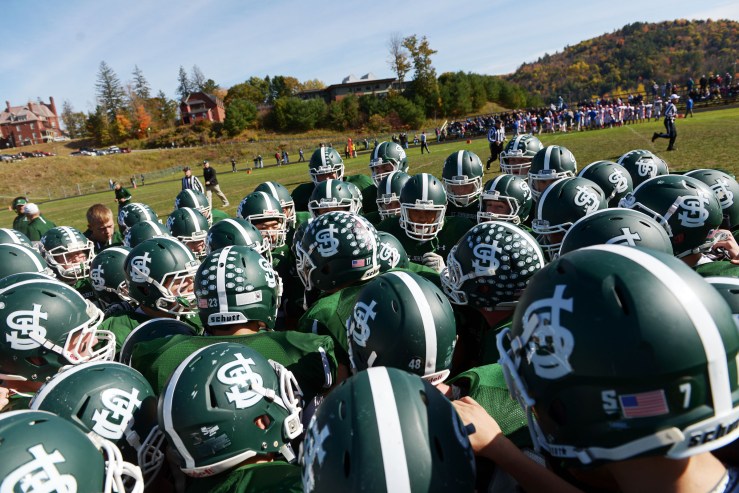
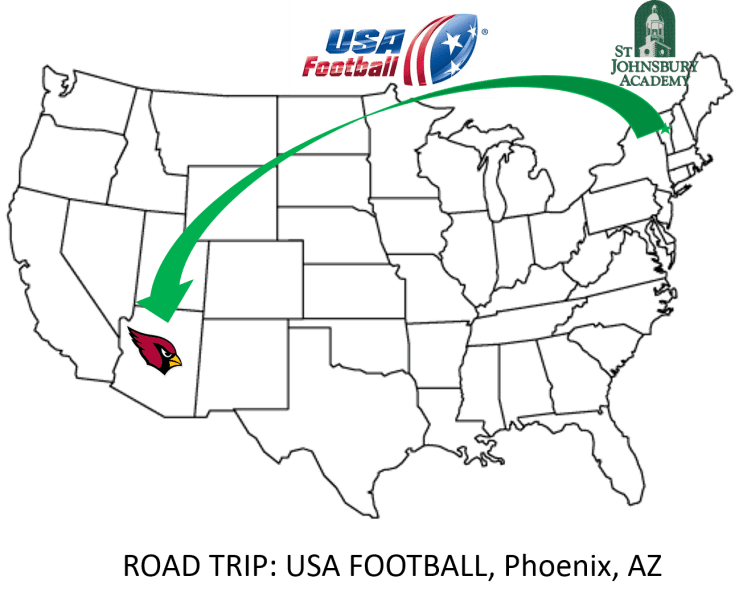
 Continuing the conversation on my recent trip to Phoenix…
The second of the four courses we produced with USA Football at the Arizona Cardinal’s Training Center was entitled Leadership and Team Building.
If we really step back and take a look at our coaching roles in the lives of our student athletes, developing young men and women of character, ethics, and morals and reinforcing their potential to contribute to society after they hang up the helmet and cleats is really our greatest mission. We help shape character traits so our athletes can be leaders both on and off the field.
We begin our discussion of leadership by quoting three of our past presidents…
“The greatest leader is not necessarily the one who does the greatest things. He is the one that gets the people to do the greatest things.” President Ronald Reagan
“Leadership is the ability to decide what is to be done, and then get others to want to do it.” President Dwight D. Eisenhower
“A leader is a person who has the ability to get other people to do what they don’t want to do, and like it.” President Harry S. Truman

All of our presidents agree that leadership is about getting others involved to get the task accomplished. All would likely agree leadership is, and should be treated as a privilege. Given the privilege to lead, one should consider two key concepts: Deference versus Respect.
We recognize there are significant differences between Respect and Deference. Deference is a reverent and considerate attitude towards someone because of their position (principal, athletic director, coach), but Respect is a feeling of deep admiration for someone because of their abilities, qualities or achievements. In a nutshell, deference is given; but respect is earned. As coaches, we’re given a whistle, clipboard, and the authority to run the team, but the deference our athletes, parents, faculty, and community offer only goes so far. Every single day, through our words, actions, and decisions, we earn, cultivate, and maintain the respect of those very same people. In doing so, we model behaviors we hope our players will want to emulate. We must be ever mindful of our example, and understand all the hard work poured into earning respect can be destroyed in seconds.
 Then we focused on understanding the millennial generation we now coach. Generations are shaped by the circumstances and philosophies surrounding their upbringing. If you are a Baby Boomer, you were likely shaped by the prosperity of the Post War Years and the Civil Rights Movement and raised by a working dad and stay at home mom. If you are used to coaching Generation X who were shaped by the Cold War and raised as latch key kids with two working parents. You may not understand today’s generation without taking a step back and considering the view from their perspective. The Millennial generation are shaped by the events of 9/11 and the War on Terror. Many of them spent their early childhood in daycare and are now raised by helicopter parents. Their goals and aspirations are shaped by their experiences, and as leaders, we need to understand how those factors affect perspective and motivations if we are to help them maximize their potential and performance.

The conversation continues with John Maxwell’s “17 Undisputable Laws of Teamwork.” Discussing them in depth, we looked at how they apply to today’s football teams. Next, we borrowed from a US Marine Corps discussion on team building. I’ve had the privilege of sharing firsthand how the Marine Corps builds a team we know as “The Few and The Proud…” turns out the very same process, tenets, and values they use are just as applicable in building a winning football team.  Both a Marine Corps unit and a high school football team go through the phases of Forming, Storming, Norming and Performing. Nobody trains teams like the Marines, and by studying their model, we can reinforce our coaching success.
We conclude the course by understanding the differences between team building and hazing and focus on the negative impact hazing and bullying can have on your team, your school and your career.
I believe leadership is a privilege. As coaches, we have a fleeting moment to have a positive impact on the lives of our student athletes. It’s critical we seize the opportunity, set a good example, and cultivate young leaders for our team, and for our future.
Coach Rich Alercio is available to discuss summer OTAs, coaching philosophy, X’s & O’s, or teach his O-Line “techniques in the trenches.” Contact Coach at richalercio@gmail.com and share http://www.olineskills.com with your colleagues and friends. Thanks for your time!














 O Line Skills