PASS PROTECTION
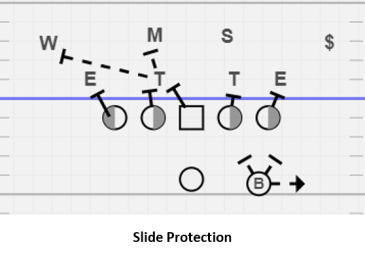
In Week 5 of Summer OTAs, we install the Slide Protection used in our drop-back passing game. Our Slide Protection is a half slide. We NEVER full slide. We want to get the Running Back out as a receiver if there is no blitz and we do not want to have the matchup of a Running Back pass blocking a Rush End. We want offensive linemen pass blocking defensive linemen.
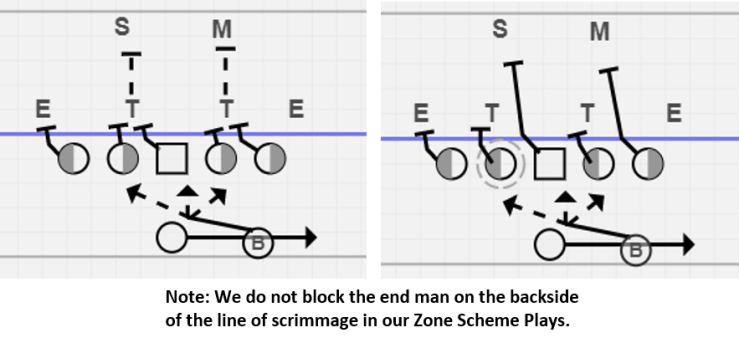
Our Slide protection combines two schemes discussed in earlier blogs: Man & Gap. Half the offensive line is in a Man scheme while the other side and the Center are in a Gap scheme. The Running Back blocks to the Man side. This allows for a 6-man protection with 3 blockers on each side of the ball.
Just like the Man Schemes in our running game, the Man side Guard blocks #1 on the Line of Scrimmage and the Tackle blocks #2, regardless of their alignment. The Center begins the Gap scheme Slide away from the Man Scheme. The Center has the A Gap, Guard has B Gap and Tackle has C Gap. The Running Back has a check release vs any blitz to the Man side.
On day 1, we will have the offensive linemen communicate from Tackle-to-Tackle on the Man side then the Gap side as follows: “I have #2, I have #1, I have A, I have B & blitz (with no DL in the B), I have C”. As we advance to protect vs stunts, the Man side Guard and Tackle can switch vs twists but those two offensive linemen have those two defensive linemen. The Gap scheme of the slide already accounts for all twists and blitzes.
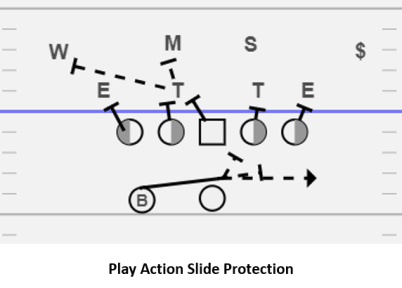
If a defense attempts to blitz our protection to keep the Running Back from getting out into his pass route, we will bring the Running Back across the formation in his protection. Since the Man and Gap sides are predicated on the side the Running Back is going, the offensive linemen must identify where the Back is protecting then call the protection accordingly.
Note the importance of communication on the line of scrimmage. As discussed earlier in the OTA Blog Series, we are also working on team building and interdependence. Our team plays a high tempo scheme and we use offensive tempo as a key component of momentum. The only way to support that tempo is to communicate. Communications further reinforce roles, responsibilities, and convey a sense of understanding, purpose, and confidence. When we have a common vision of success and communicate effectively to achieve that goal, it feeds tempo strengthening both our offense and our team.
Coach Rich Alercio is available to discuss coaching philosophy, X’s & O’s, or teach his O-Line “techniques in the trenches.” Contact Coach at richalercio@gmail.com and share http://www.olineskills.com with your colleagues and friends. Thanks for your time!

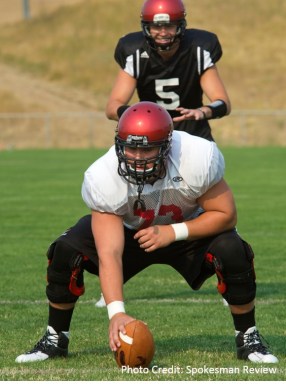 I recently received a text from an old friend whom I played against in high school and then with in college. He was inquiring about how we teach the shotgun snap. When he was playing next to me in the 80’s I was a 205 lbs center in a split back veer offense with one hand on the ball, the other on the ground, and two hands under my butt.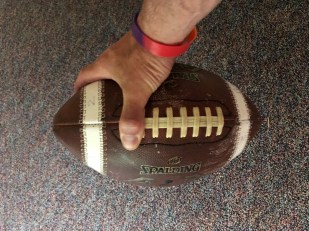

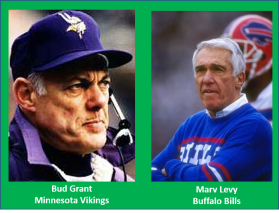 How do you perceive Marv Levy and Bud Grant?
 I received an email from a coach in Oklahoma last week who had heard one of my podcasts on USA Football. He was intrigued by the cultural changes we made at St Johnsbury Academy turning a perennial underachiever into a team competing in the Vermont Division I state championship game three of the past four years. He went on to inform me that he had just been offered the head coaching position of a team that had 0 wins in 2017 and then requested a conference call to discuss his next steps.
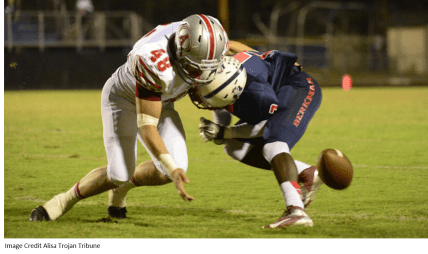 stating that the drill is named after their state for a reason. This coach recognizes the futility of running drills that benefit only the biggest and strongest players while driving away kids who are not initially prepared for such collisions as they are introduced to the sport.
