Tips for Summer Training Success Part II

This week we tried to bring Part II of our Summer Training Series with another guest contribution from Coach Adrian Guyer, CSCS, USAW-2, CSAC. I can’t tell you how fortunate we are to have Coach Guyer’s knowledge, skills, abilities, and support. I’m confident it will pay off throughout the summer and into the Fall season!

While I’ve been a coach for several decades, I’m pretty new to the blogging space and after further consideration, the formatting, videos, and content on xiptraining.com do a better job than I can here of conveying the content.


You can read more, help yourself and help your team improve at www.xiptraining.com and review summer training tips from this article at https://www.xiptraining.com/single-post/2017/06/27/Summer-Training-Applications-for-Athletes-Part-2

I look forward to letting you all know how our OTAs and Coach Guyer’s strength and conditioning program support our development this summer.

Coach Rich Alercio is available to discuss summer OTAs, coaching philosophy, X’s & O’s, or teach his O-Line “techniques in the trenches.” Contact Coach at richalercio@gmail.com and share http://www.olineskills.com with your colleagues and friends. Thanks for your time!


Strength & Conditioning Follow Up!

As a follow-up to our previous blogs about hiring a qualified person to handle your Strength & Conditioning… Once you do, let them do their job!

I recently attended our state NSCA (National Strength & Conditioning Association) clinic.  One of the presenters shared some great information but also shared something troubling.  He informed us that his head football coach told him that he needed to accomplish three goals:

1) Increase the player’s bench press max. 

2) Increase their squat max. 

3) Make them look good getting off the bus. 

He accomplished those three goals, but then shared the team has only won seven games over the past three seasons…

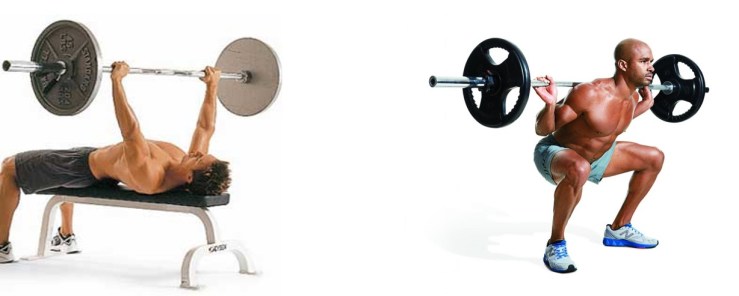
It is great to increase your bench and squat and doing so will likely make you look better getting off the bus, but that does not necessarily translate into wins on the field.

2017-06-19 bench & squat

The job of a Certified Strength & Conditioning Specialist is not to turn your players in to power lifters or bodybuilders but rather to make them better football players. Your job as coach is to effectively communicate the goals you’ve established for your team, and to help your strength and conditioning coach help you, by adding a “purpose.” If your S&C Coach understand “the why,” behind your goals, he or she can make decisions along the way to reinforce your success.

The goals of our strength and conditioning program have little to do with the aforementioned goals.

Our goals are as follows:

  • Decrease injuries,
  • Increase Rate of Force Development (Acceleration)
  • Increase Rate of Force Acceptance (Deceleration)
  • Increase mobility
  • Increase Power (Work / Time)

The purpose of our program is to build healthy, resilient teammates who are faster, stronger, more powerful, and more confident in themselves and their teammates. With an understanding of both the goals and purpose, we’re better able to discuss the program plan, implementation, and measures of performance/success.

Note that we focus on Power rather than strength.  We have no interest in seeing our players take 4 seconds to put up “three plates” (315 lbs) on their bench press.  We would much rather see our players bench “two plates” (225 lbs) in less than 1 second after a 2 second eccentric contraction and a 1 second hold.  

If you are unable to get a CSCS to work with your program and you, like so many other football coaches, are thrust into the position of Strength & Conditioning Coach at your school, please get certified. (read more bout certification here: https://www.nsca.com/Certification/CSCS/)                                                 2016-06-19 CSCS Logo

If you do not have the time to study for 3-6 months and take the CSCS test, consider taking one or both of the following classes and receiving their certification:

  • USA Weightlifting Level 1
  • NSCA Essential Foundations of Coaching Lifts. 

Both will make you a better Strength Coach and reduce liability in the unfortunate event of a weight room related injury.

Thanks for the questions and compliments on last week’s blog. One thing to note, last week I included the link to Coach Guyer’s website (https://www.xiptraining.com/) but should have included a link to his version of the guest post which can be found here: https://www.xiptraining.com/single-post/2017/06/13/Tips-for-Summer-Training-Success-Part-1

As always, thanks for following us and participating in this journey!  Coach Rich Alercio is available to discuss summer OTAs, coaching philosophy, X’s & O’s, or teach his O-Line “techniques in the trenches.” Contact Coach at richalercio@gmail.com and share http://www.olineskills.com with your colleagues and friends. Thanks for your time.

Summer OTAs: Winning Begins Here…

As the school-year comes to an end, our focus turns to summer Organized Team Activities (OTAs).  Although we have made numerous changes to our program in the past 4 years, nothing has made more of an impact on our success than the physical development of our players.  We tell our players, “games are not won on Fall Friday nights and Saturday afternoons in front of thousands of people…  They are won in the off-season when nobody is watching…”

2017-06-06 Agilities
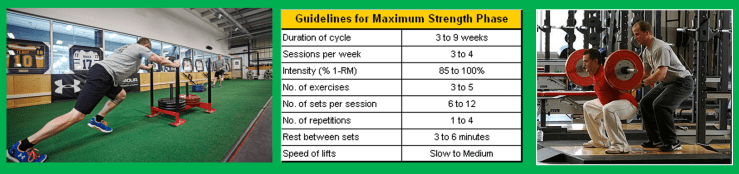
Our student athletes begin training 3 days a week the week after graduation.  On Mondays, we work speed development (acceleration, deceleration, change of direction, lateral movement, as well as linear speed) followed by a 7v7 practice.  On Tuesdays, we work strength then have an OLine practice.  We have another strength training session and 7v7 practice on Thursdays.  We do not want to compete with weekend family plans and summer baseball or AAU basketball so we intentionally avoid Friday and Saturday.

What we do and how we do it is even more important than that we do it.  In college, you have a Certified Strength and Conditioning Specialist (CSCS); A luxury frequently unaffordable at most high schools.  CSCS are professionals who apply scientific knowledge to train athletes with the primary goal of improving athletic performance.  If you don’t have one, find one in your area and recruit him/her to get involved with your athletes.  Don’t make the mistake of thinking you know enough to do it just because you get in the gym 3-4 days a week.

I came to that epiphany this winter when I was invited to join a round-table discussion of Strength Coaches at Burke Mountain Academy.  BMA is the premier alpine ski academy in North America.  Their strength coach, Darrell Gray, has become a friend and is a valuable resource. Also in attendance were strength coaches from the US Ski Team, the Philadelphia Eagles, Sherbrooke University in Canada, and a local coach who owns a training facility nearby.  I was awed by the scientific approach and level of detail each coach incorporated into their training.  It was far beyond my level of understanding.  I was with them when they addressed incorporating unilateral and bilateral lifts and movements in the sagittal, transverse and frontal planes.  They started to lose me when they discussed Rates of Perceived Exhaustion (RPE) and Undulation, and completely lost me when they shifted to Block vs conjugate periodization training!

2017-06-06 strength and conditioning
Even if I found block vs conjugate periodization training daunting, I’m perceptive enough to recognize a need for experts when I see one. We’re fortunate to have an all-star supporting the Hilltoppers when we start on June 12: Adrian Guyer CSCS, USAW 2, CSAC of XIP Training Systems, will implement our summer program and instruct our players on their warm up, speed training and strength program.  It seems the more letters after their name, the more qualified they are to create and instruct your program, but we’re equally lucky to have a professional who cares deeply about our team’s success and players’ development.

Over the next few weeks we will go into more detail on our athletic performance training, our OLine practices and our 7v7 preparation. We’ll conduct camps, clinics, host and participate in 7v7 competitions, and have fun working hard together. I look forward to hearing your thoughts, exchanging ideas, and preparing for all the new season brings.

Coach Rich Alercio is available to discuss summer OTAs, coaching philosophy, X’s & O’s, or teach his O-Line “techniques in the trenches.” Contact Coach at richalercio@gmail.com and share http://www.olineskills.com with your colleagues and friends. Thanks for your time.

Talking the Talk!

As May comes to a close, I want you all to know how much I’ve appreciated your feedback on the “Making Your Program the Big Time” series of blog posts. “Big Time” programs use a variety of tools to help reinforce team culture and commitment. Over the past few weeks we’ve reflected on setting standards, building traditions, innovatively managing equipment and budgets, and how many of the concepts underpinning coaching apply regardless of the level of play.

This week I’d like to reflect on “Talking the Talk.” It may sound cliché, but words have meaning. Words, phrases, and sayings underpin every team’s culture, and an early measure of team and culture building can be assessed by the transition from students’ common speech patterns to the way teammates speak individually and collectively.

“Big Time” words matter. When we refer to things in our program, we use the same terms that our kids hear on ESPN.  In two weeks, we begin our summer schedule but we do not call them Summer Workouts.  We refer to them as OTAs or Organized Team Activities.  When we host our July camp we call it Mini Camp.  We never use the term 2-a-days but rather call it pre-season training camp.

2017-05-30 OTAs

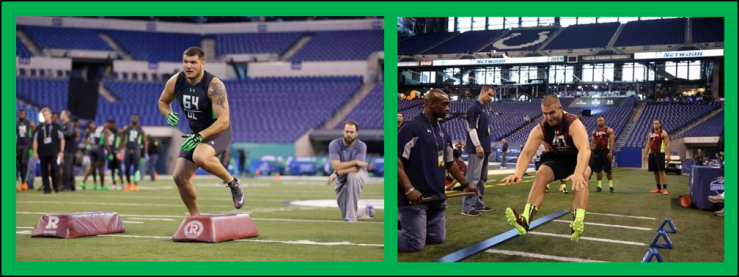
On the first day of training camp, we will put our players though a Combine test much like the one we all see on TV. We also divide our players not as upper and under class men, but as Veterans and Rookies.  When one of our players gets hurt they are either placed on the Injured Reserve (IR) or Players Unable to Perform (PUP).  The IR list is for those who are out for an anticipated period of time.  The PUP list is for those who are day-to-day.

2017-05-30 Combine

Lastly, we no longer use the term Strength & Conditioning as everyone despises conditioning.  We call it Athletic Performance Training.  During the season, we train on Monday afternoons and Thursday mornings.  Since the boys do not have the opportunity to get breakfast on Thursdays, my wife sets up a table outside of our weight room with breads and muffins she baked the night before along with fresh fruit and drinks.  We call it our Team Training Table.

When my coaches and I hear our Veterans teach the Rookies our teams’ words and phrases, I know they are helping new teammates learn to talk the talk so they can walk the walk of a Hilltopper. When I hear Rookies talking the talk, and explaining our words to parents and friends, (with pride and a sense of belonging), I know we’re on the way to building something special; a Big Time program even in a small school in Vermont.

Coach Rich Alercio is available to discuss coaching philosophy, X’s & O’s, or teach his O-Line “techniques in the trenches.” Contact Coach at richalercio@gmail.com and share http://www.olineskills.com with your colleagues and friends. Thanks for your time. I look forward to continuing our conversation!

“Big Time” Traditions

More on making your program the “Big Time” for you, your team, school, and community.

Football is a copycat game.  We imitate (copy, borrow, replicate, clone) plays, schemes, formations, alignments, stunts, coverages, blitzes…why not traditions?

Heading into the 2014 season, after changing our helmets, we reinforced success by starting new traditions.  We looked at the best traditions in college football and sought the help of other coaches for creative ideas.

Since we are the Hilltoppers, my good friend and fellow coach who is an exceptional motivator/leader suggested we emulate Clemson’s run down the hill as they enter into “Death Valley.” We have a cross country trail that goes down a hill through the woods and exits at the entrance of our stadium.
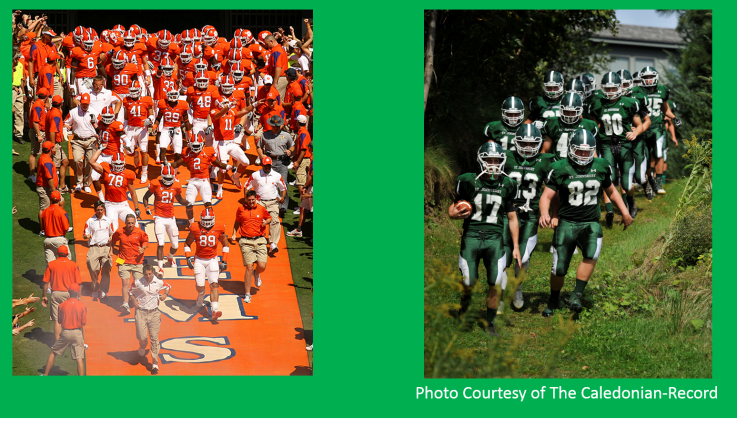
2017-05-16 Down Hill Tradition

Then, we borrowed the “We Are…” call from Marshall and Penn State.  Now, before every home game we take the XC trail into the woods and at the top of the hill above our stadium, I yell “WE ARE” and the team responds “HILLTOPPERS”.  Then we run down the hill to enter our stadium.

To further enhance our look, we borrowed the Ohio State tradition of awarding helmet stickers.  Since we are not buckeyes and no one knows what a Hilltopper is, we use little white footballs as our helmet stickers.  Kids love the look and it causes them to watch more video as they email me on Sunday with how many stickers they believe they have earned.

2017-05-16 Helmet Stickers.png

To finish out the gameday experience, we introduced tailgating.  Please let me emphasize, tailgating does not mean alcohol or unruly behavior. It’s about family, fellowship, and team cohesion. We create an environment where parents, players, students, and faculty extend the Hilltopper team culture into the local community. We section off a parking lot that overlooks our stadium.  Our player’s parents set up a smoker, grills and tables.  Every parent brings something to share and contributes to the event.  The parents of our freshmen players often staff the smoker and grills so the parents of our older players do not miss seeing their sons play.  Win or lose, our staff, families and players head to the parking lot to tailgate after every home game. They share the Hilltopper spirit, extend the Hilltopper family, and reinforce the Hilltopper Tradition. If we do this right, players, parents, teachers, coaches, and the community may come and go over the decades ahead, but “tradition will never graduate.”

Thankfully, we win more than we lose.  Since the 2014 season, when we changed our helmet color and instituted these new traditions, we have gone 13-3 at home including a 4-0 playoff record.

Recent posts about “Making the Big Time Where You Are,” have really spurred great feedback and comments from readers. I look forward to sharing one reader’s reflections on our program in an upcoming blog post. I hope you’ll enjoy reading it as much as I did!

If you’d like to learn more about making your program “The Big Time” for you, please stay with us on olineskills.com. We’ll be discussing more of the changes we implemented to cultivate success in the coming weeks. Coach Rich Alercio is available to discuss coaching philosophy, X’s & O’s, or teach his O-Line “techniques in the trenches.” Contact Coach at richalercio@gmail.com and share www.olineskills.com with your colleagues and friends.
Make the “Big Time” Where You Are.

Make the “Big Time” Where You Are.

Last week I began a conversation with you about making your program “The Big Time” for you, your players, your school, and your community… Some approaches are external, some internal, and some combine an outward facing symbol to help cultivate an internal change in team identity.

Few of us enjoy the bright lights or big budgets that seem to go hand in hand with an ESPN SportsCenter highlight reel. Big stadiums, celebrity coaches, and marquis branding seem to dominate the highest levels of collegiate and professional athletics. One of the hottest trends in Big Time college football is the changing of helmet color and design.  Programs seem to have a different helmet or uniform every week, and players project images or identity with little care or concern over the costs of such a metamorphosis.  While most high schools and small colleges may not be able to change every week, they can change every year at little or no additional cost. There are ways to emulate the “Big Time,” without the big budget.

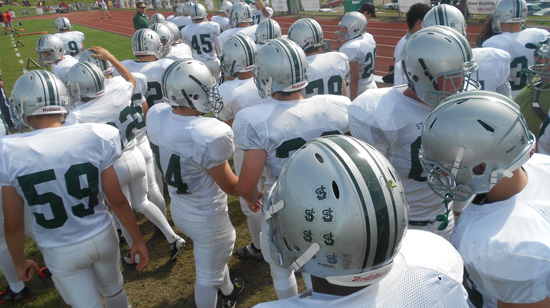
SJA_Football_gray helmet
When I arrived at St Johnsbury Academy in the summer of 2013, the team had endured seven consecutive losing seasons.  The eighth, my first, was no different.  We made the playoffs but suffered a quick exit.  During all eight of those losing seasons, the team wore silver helmets with a grey face mask, green logo and green stripe.  Heading in to the 2014 season, the program needed a change; an outward expression of evolution and improvement.

One of the first, and most noticeable of several program changes that year was our helmets.  As a relatively small school in northern Vermont, we did not have the budget to make big changes. The same creative problem solving we emphasize on the field for our players would have to become the basis for what initially appeared to be an insurmountable fiscal challenge. Working closely with our reconditioning partner, Stadium Systems, we explained our intent, conveying both the importance of the change, and the reality of our limited resources.

We knew the helmet reconditioning process includes repainting every year and seized the opportunity to paint our helmets a new color.  Similarly, we order new logos each year, so instead of ordering green, we chose white. Although we could not afford to have our face masks dipped to change color, Stadium Systems worked with other clients and arranged a swap with a school who had white facemasks looking to go to grey.  Trading our facemasks for theirs, we found a “win/win solution” with no cost to either school!  The only additional cost was the painting of helmets not used the previous season in need of recertification, but that nominal expense was well worth it.

Beginning with their new look, our kids felt “Big Time” entering the 2014 season. They knew opponents would first see, and subsequently feel the change in our identity upon first contact. With our new found confidence, the Hilltoppers played like a “Big Time” program, going 10-1, and earning the school’s first trip to the state championship in 20 years.

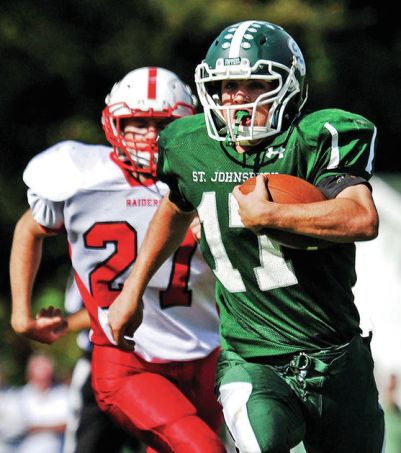
SJA_Football_green helmet

If you’d like to learn more about making your program “The Big Time” for you, please stay with us on olineskills.com. We’ll be discussing more of the changes we implemented to cultivate success in the coming weeks. Coach Rich Alercio is available to discuss coaching philosophy, X’s & O’s, or teach his O-Line “techniques in the trenches.” Contact Coach at richalercio@gmail.com and share www.olineskills.com with your colleagues and friends.
Coaching is Coaching…

Coaching is Coaching

You’ve heard the saying before and it is true.  Coaching is coaching.  If you can coach, you can coach at any level.  I have had the good fortune of being invited to join training camp as a “visiting coach” with an NFL team when I was in between jobs, and I have had the pleasure of coaching my youngest son’s 5th & 6th grade flag football team.  I also coached my middle son’s padded flag team.  I have been an assistant, coordinator, and head coach at the high school level; and I have been a graduate assistant, assistant, coordinator, and head coach at the college level.  I have worked at both scholarship and non-scholarship schools.

I have worked with great coaches and below average coaches at every one of those levels.  Yes, there were a few coaches on that NFL team that were just off the charts in their ability to coach, but I worked with high school coaches who could have been very successful college coaches, and college coaches who could have been successful in the NFL.  The biggest difference I have found is in how much time you want or are able to commit.  As you know, the sun rises early and settles late during the summer months.  Every day of that NFL training camp, the staff reported before the sun came up and departed long after it had set.  We ate breakfast, lunch, and dinner in the training facility.  It was great as a visiting coach, but sure would be tough on a family.  The life of a college coach is extremely time consuming as well, even more so when you add recruiting across multiple states into the mix.

Over the past 30 years, I would say that I had the most fun back in 1991, as a part-time assistant at East Stroudsburg University while working 2 other jobs, living with 2 other coaches, barely able to pay the electric bill, but learning and coaching football every day.   But I have never been happier than I am now as an Assistant Athletic Director and Head Football Coach at St Johnsbury Academy in the Northeast Kingdom of Vermont coaching 2 of my 3 sons.  We all dream about coaching in the “big time” but make the big time where you are.

Over the next three weeks, I plan to share some thoughts about how I make my current role “the big time,” to me. I hope after 30 years of coaching I can share some of the lessons learned and help you avoid some of the obstacles I encountered along the way. I don’t presume to have all the answers, but just as my mentors shared their lessons with me and helped me grow as a coach, parent, and person, I’d like to reinforce their efforts and share some thoughts with you. Hopefully, together we can explore ways to maximize the best the coaching profession has to offer. I look forward to continuing the conversation.

Contact Coach Rich Alercio at richalercio@gmail.com


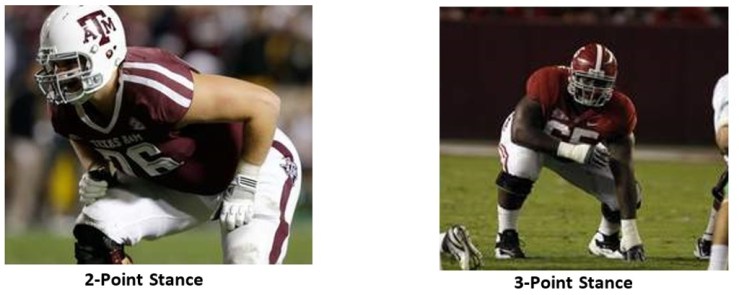
Offensive Line… 2 or 3 Point Stance?

2-point or 3-point?

2 and 3pt stance

In the spring of 2004, after hosting the 3rd annual Alercio OLine Clinic with over 700 players and coaches in attendance, I was contacted by K.C. Keeler, who at the time was the head football coach at the University of Delaware.  Coach Keeler and his offensive line coach, Kyle Flood, invited me down to Delaware to discuss what had made my clinics so popular.

The Blue Hens had just won the 2003 I-AA National Championship and both Coach Keeler and Coach Flood were well known in the northeast as offensive innovators.  I knew a trip to Newark would be a great opportunity for me to learn.  Having watched their national championship game on ESPN in December, I was struck by something almost unheard of 15 years ago.  They played the entire game with their offensive linemen in 2-point stances.

After sharing the details of my clinic with them, they made themselves and their video available to me.  I watched over and over as they successfully ran Power in short yardage and goal line situations with their linemen in 2-point stances.  I was sold.

The 2-point stance has allowed our players to look to the sideline for plays in our no-huddle system.  It makes it easier for them to recognize fronts and communicate blocking schemes.  Pass sets, jump sets, pulls, combos and double teams are all easier to execute from a 2-point stance.

If you are an option team who is 90% downhill run blocking in the sagittal plane, I would suggest you keep your linemen in 3-point stances.  If not, I would strongly suggest you consider getting your big guys’ hands off the ground!

Coach Rich Alercio is available to assist with one on one, small group, or large audience presentations. For more than 20 years, Coach Alercio has led, taught, coached and mentored student athletes and coaches across the high school, college, and professional levels of football.

Rich’s National level presentations for clinics like Nike and Glazier, have earned him acclaim and praise for his offensive innovations as a strategist and play caller, and his one on one “techniques in the trenches” offensive line coaching has improved the tactics, techniques and procedures of more than 10,000 Offensive Linemen over nearly 20 years.

Contact Coach Rich Alercio at richalercio@gmail.com

Rich Alercio’s OLine Clinic Recap

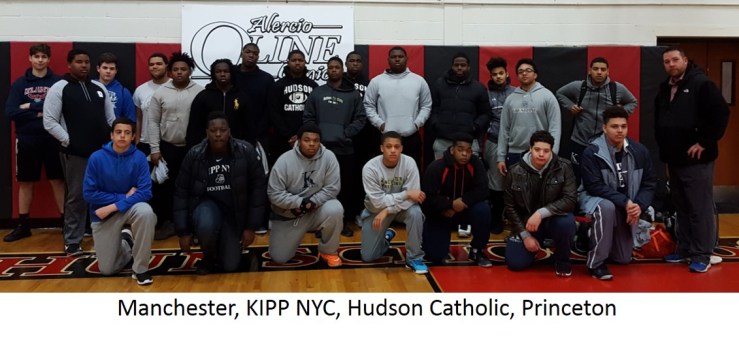
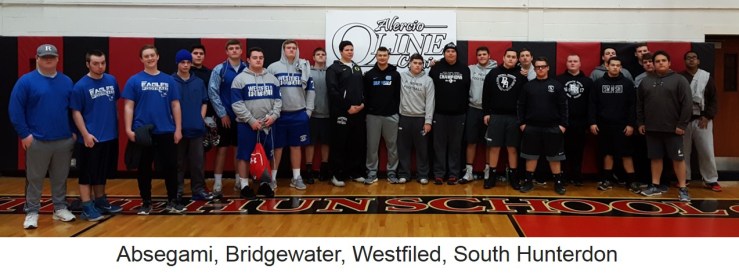
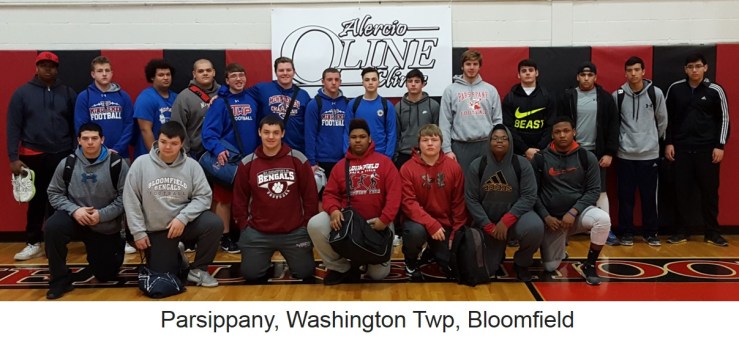
More than 200 offensive lineman representing over 40 high schools in 2 states along with dozens of their coaches made the annual pilgrimage to the 16th Alercio OLine Clinic on Sunday, March 26.

We spent 4 hours at the Hun School of Princeton learning and drilling 2 & 3-pt stances, 5 Run Steps, 2 Pass Steps, Run & Pass Punches, Targets and Strike Points, Drive Blocks, Down Blocks, Jump Sets, 4 Pulling Techniques, Combination Blocks, Double Teams, Pass Sets, 3 Run Blocking Schemes (Man, Zone & Gap) and Slide Protection.

Players and coaches both enjoyed the day, the team building, camaraderie and a chance to learn new techniques and improve skills.

If you’d like more info on the clinic, techniques, or how you could have Coach Rich Alercio teach his “Techniques for the Trenches” clinic at your school, please email Coach Alercio

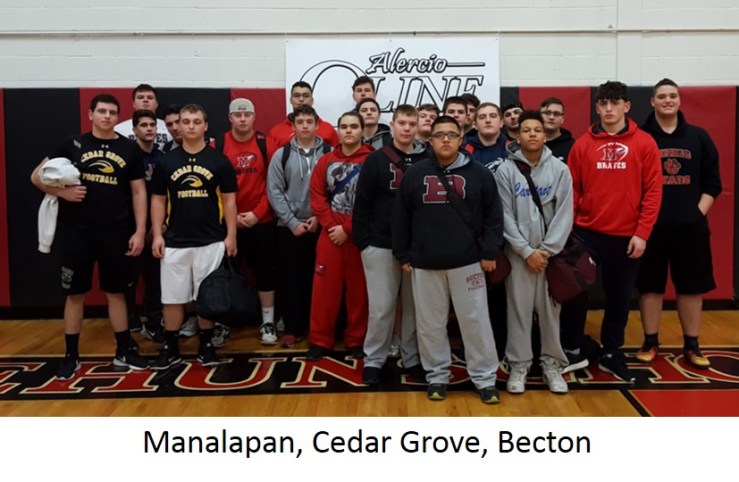
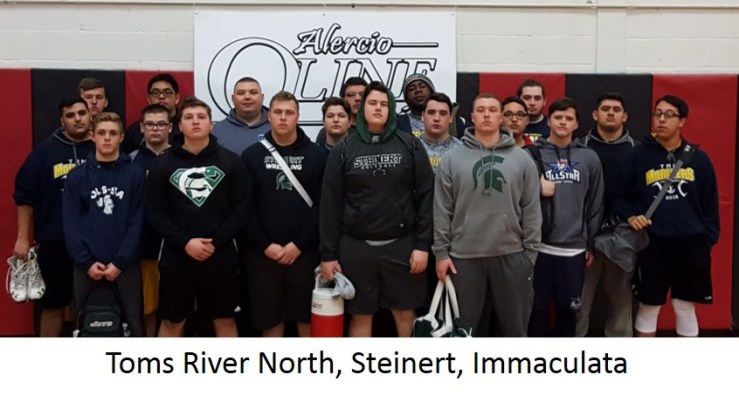
Check out some of the participants below:


1-Manalapan, Cedar Grove, Becton
2- Toms River North, Steinert, Immaculata
3-Manchester, KIPP NYC, Hudson Catholic, Princeton
4-Holy Cross, Delran, Central Regional, Ewing
5-Absegami, Bridgewater, Westfiled, South Hunterdon
9-Montclair, Hamilton West, Manasquan, Old Bridge, Ocean City, Pope John Paul II
8-Paulsboro, Montgomery, Belleville, Columbia, Nottingham
7-Shabazz, Rahway, Manville, Somerville
6-Parsippany, Washington Twp, Bloomfield
oline-clinic-cover-shot

Why Young Coaches Should Think Twice Before Leaving for a Promotion…

St. Johnsbury (Vt.) head coach Rich Alercio remembers receiving the same advice years ago that many young coaches still hear today: “To move up the ladder, coaches always need to keep an eye on their next step up…”  (or should they???)

Alercio heard that coaches should seek a new position every two-to-three years. He took the advice, leaving a job where he was comfortable—but finding his new role unfulfilling, even though it came with the allure of slightly more money and great responsibility.

It was a decision that Alercio regrets, and one that he hopes today’s young coaches can learn from.

“If you find a good job, where you like it, you’re learning and growing, stay there,” Alercio said, during an appearance on the USA Football Coach and the Coordinator podcast.

Though Alercio’s career eventually got back on track, he’s quick to encourage young coaches to think twice about leaving a good situation, particularly if the current environment promotes a healthy work-life balance.

“It’s a heck of a lot easier balancing life, family and happiness when you have a good job and you stick with it,” he said.

To listen to Alercio’s full interview on the USA Football Coach and the Coordinator podcast with Keith Grabowski, click here: Coach Rich Alercio on “The Coach & Coordinator Podcast”

“Innovations for Any Offense” eClinic- 

Live today March 20th, check out Coach Alercio’s eclinic on Innovations for any Offense

Click here: Coach Rich Alercio’s Glazier eClinic 


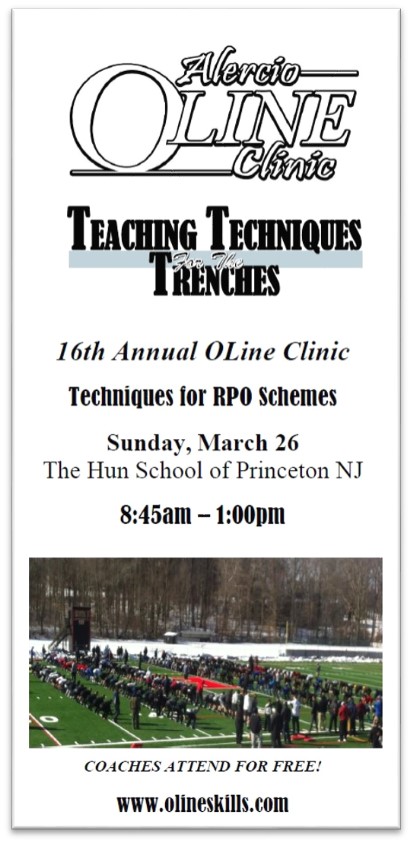
Don’t Miss The 16th Alercio OLine Clinic 

Sunday, March 26th 2017
Download your brochure:

OLine Clinic Brochure

oline-clinic-cover-shot